Chemical Degradation of Plumbing

There is no code requirement that the quality of the water be verified. There are federal laws in place, but enforcement is anything but reliable across the country. I would recommend a custom filtration system with CLEAR filter housings that allow the user to visually inspect the cleanliness of their water, so that we can be more aware of the substances we put in our bodies.
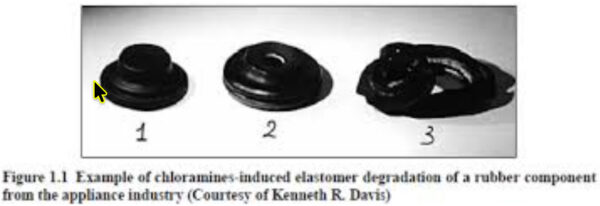
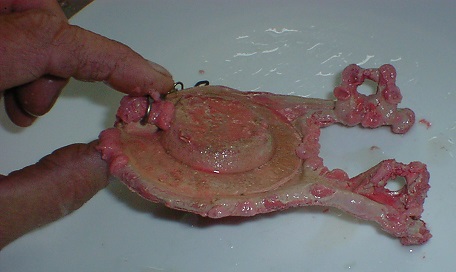
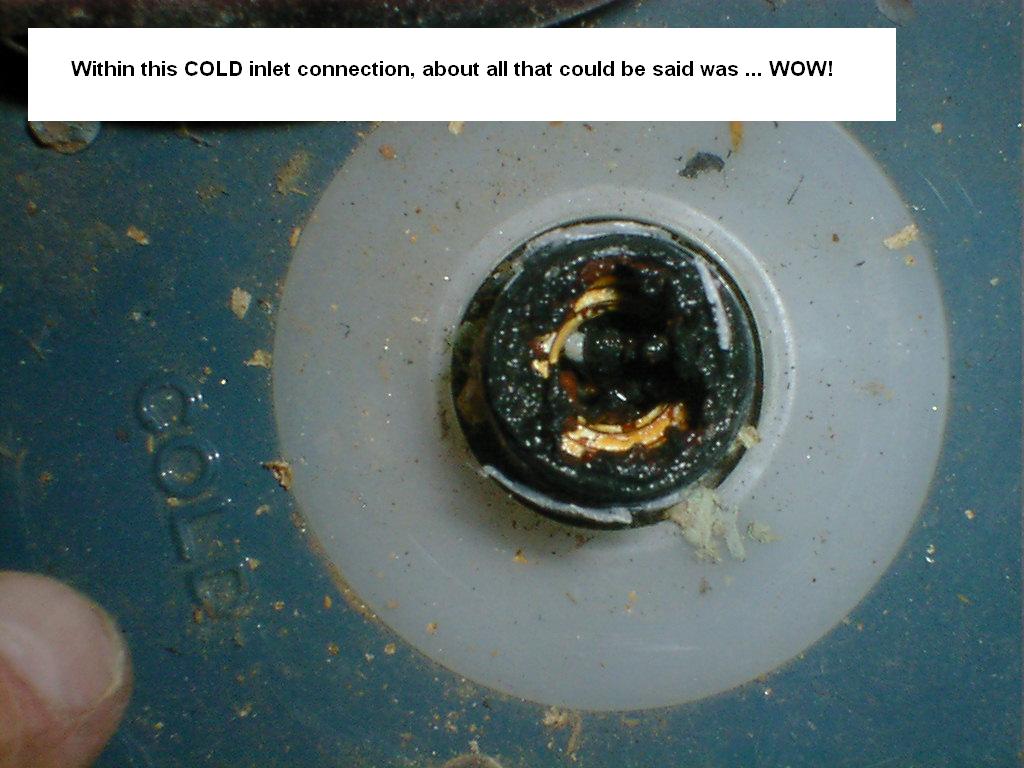
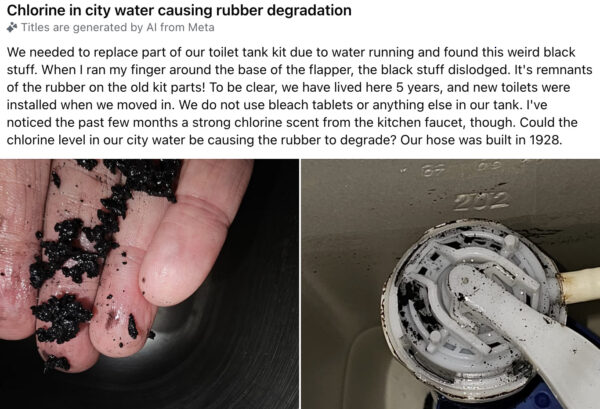
Public water has chlorine which effervesces, especially over long distances, so ammonia is bubbled in as a binder strategically(and with various excuses for doing so), and bam! our water is corrosive, but arguably clean. Depending on your proximity to the treatment plant you may have more or less corrosive water, and your butyl-rubber plumbing parts degrade faster or slower. For my home, in Raleigh NC, near to Rex Hospital, which has heavily chloramined water, my thermal expansion protection tank begins to fail at the 5-7 year mark. We find air-tanks completely water-logged at the 8-10 year mark.
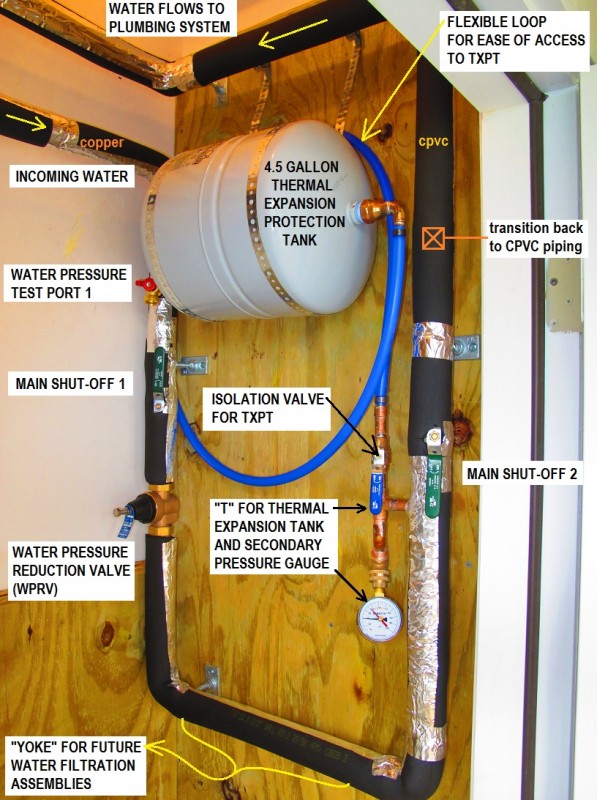
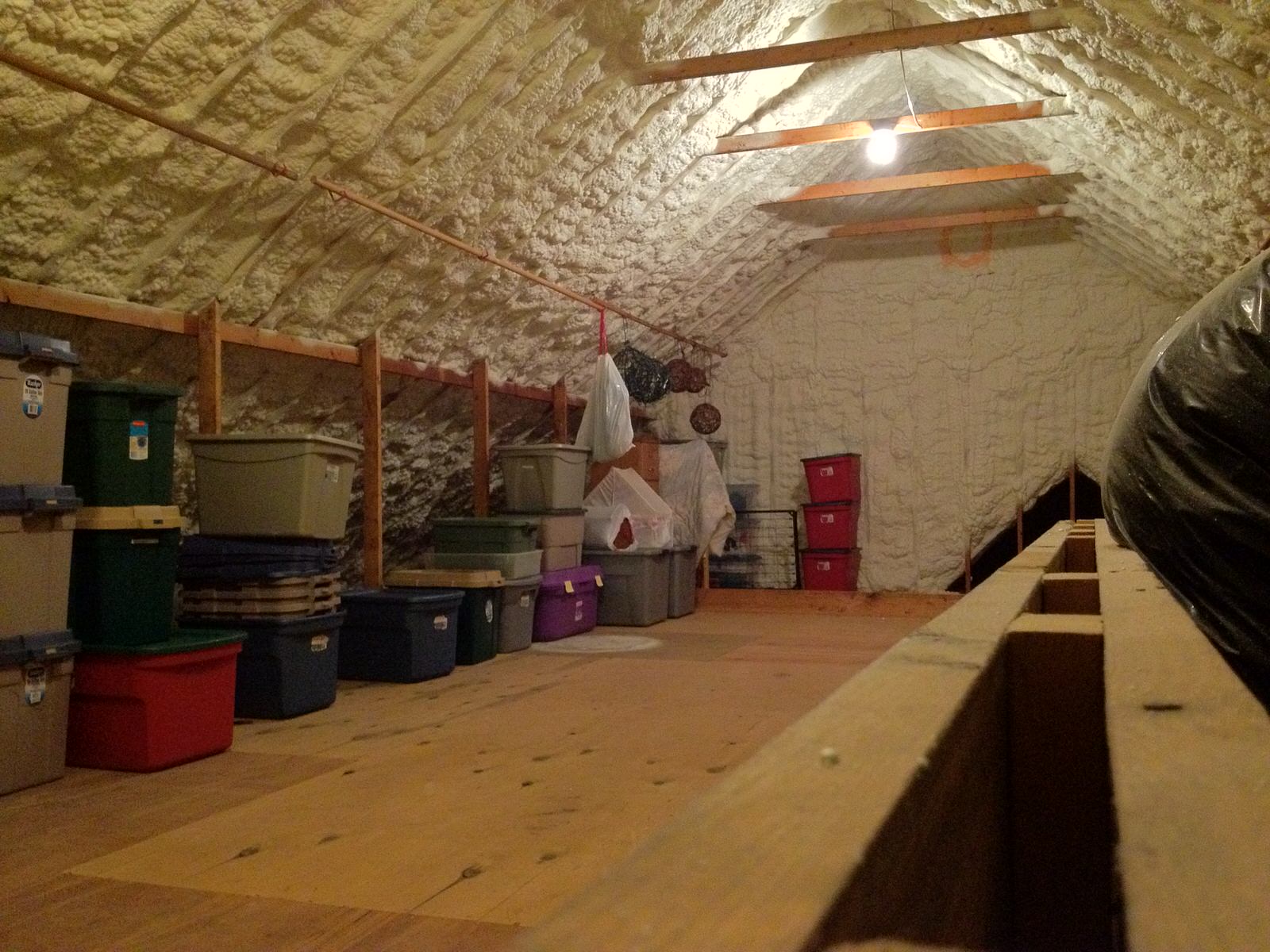
For a water heater to last 25 years, it would need to have 2-3 Water Pressure Reducers and 4-5 Thermal Expansion Tanks(all set just slightly above the reduced secondary pressure before being connected to the plumbing). Otherwise the glass-inner-liner of the steel-inner-tank, would shatter around the mid-section and slowly release water into the closed cell spray foam, gradually robbing the appliance of r-value, and eventually causing failure, or a catastrophe, but not the kind of catastrophe that you can get an insurance claim approved for. Insurance generally covers fast leaks, not slow ones.
The more contact your TXPT has to city WATER the less it will last, so avoid installing un unproperly pre-charged TXPT. My home has 70psi pressure and a 71psi 5 Gallon Expansion tank for a 50 Gallon water heater. The PSI still undergoes 8 pound swings when the tank recovers and expands. When I see 10-12 psi jumps on my lazy gauge, I know i need to replace it fast.
https://www.scirp.org/pdf/ojopm_2021060814050212.pdf
Degradation of Polymer & Elastomer Exposed
to Chlorinated Water—A Review